
Introduction
In 2009, a man with a metal detector stumbled upon what would become one of the most significant archaeological discoveries in British history. Buried beneath a farmer’s field in Staffordshire, England, lay the Staffordshire Hoard a glittering trove of Anglo-Saxon gold and silver that would reshape our understanding of early medieval Britain.
The sheer scale, craftsmanship, and mystery of the hoard have made it a subject of global fascination. But what exactly is the Staffordshire Hoard, and why is it so important? Let’s explore this treasure’s story, significance, and impact on history.
What Is the Staffordshire Hoard?
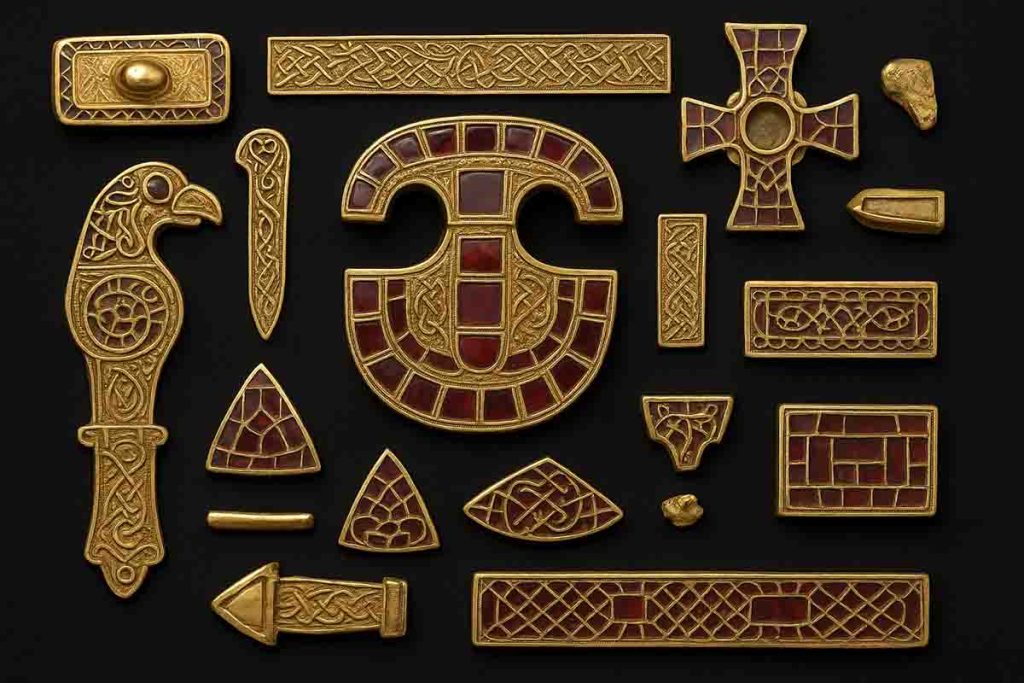
The Staffordshire Hoard is the largest collection of Anglo-Saxon gold and silver metalwork ever found. It consists of more than 3,500 items, most of which are military in nature sword fittings, helmet decorations, and other ornate pieces of warrior gear.
- Discovered: July 2009, near the village of Hammerwich, Staffordshire
- Finder: Terry Herbert, an amateur metal detectorist
- Total Value: Over £3.28 million (approx. $4.3 million at the time)
- Date of Origin: 7th century AD (circa 675 AD)
- Materials: Gold, silver, garnets, and niello
The hoard’s contents suggest it belonged to elite Anglo-Saxon warriors and may have been a war trophy or religious offering.
The Discovery
Terry Herbert was using his metal detector on farmland owned by a friend when he uncovered the first pieces of gold. Within days, he had retrieved hundreds of artifacts, prompting an urgent excavation by archaeologists from Birmingham Archaeology and English Heritage.
Within months, thousands of items were recovered from the site, many twisted or broken possibly to fit into a bag or container. The discovery stunned historians and archaeologists alike.
🔗 Related: British Museum’s Collection of the Hoard
What Makes the Hoard Unique?
1. Unparalleled Craftsmanship
Many pieces exhibit extremely fine metalwork, intricate inlays of garnets, and complex filigree patterns. The skill level indicates a highly developed artisan culture in Anglo-Saxon England.
2. Military Over Religious Artifacts
Unlike most ancient hoards, which are often religious or ceremonial, the Staffordshire Hoard is predominantly military gear. This suggests a warrior elite, perhaps linked to the Kingdom of Mercia, one of England’s most powerful early kingdoms.
3. Historical Context
Dating from around the 7th century, the hoard comes from a time of political turmoil and Christianization in England. It provides rare insights into the warrior culture, art, and politics of the Anglo-Saxon period.
Theories About the Hoard
Historians and archaeologists have proposed various theories:
- War Spoils: Likely seized during battles between rival Anglo-Saxon kingdoms.
- Religious Offering: Possibly buried for protection or as a sacred act.
- Loot Storage: It may have been buried in haste during a conflict or raid.
No human remains or containers were found, deepening the mystery around the hoard’s burial.
Where Is the Hoard Now?
The hoard was jointly acquired by the Birmingham Museum & Art Gallery and the Potteries Museum & Art Gallery in Stoke-on-Trent. Select pieces have also been displayed at the British Museum.
Today, you can see the Staffordshire Hoard on rotation in UK museums. Its discovery also led to increased funding for archaeological initiatives and inspired school programs on Anglo-Saxon history.
🔗 Visit the Staffordshire Hoard Website
Cultural Impact
- Books & Documentaries: The hoard has been featured in numerous TV programs and historical documentaries.
- Educational Programs: British schools have incorporated it into history curricula.
Tourism: The discovery site and related exhibits have become popular attractions in Staffordshire.
Frequently Asked Questions (FAQs)
Was the hoard found intact?
No. Many items were broken or twisted, possibly to be used as bullion or to fit into a container before burial.
Can you see the hoard in person?
Yes. Key artifacts from the hoard are on display at the Birmingham Museum and the Potteries Museum in Stoke-on-Trent.
Who owns the hoard now?
The hoard was acquired jointly by two UK museums with the financial support of the UK government and the National Heritage Memorial Fund.
Final Thoughts
The Staffordshire Hoard is more than just a collection of ancient metalwork it’s a time capsule from a turbulent and transformative era in British history. Its discovery helped fill historical gaps and continues to captivate scholars and enthusiasts worldwide.
For history lovers, treasure hunters, or anyone fascinated by the mysteries of the past, the Staffordshire Hoard is a golden window into the lost world of Anglo-Saxon England.