
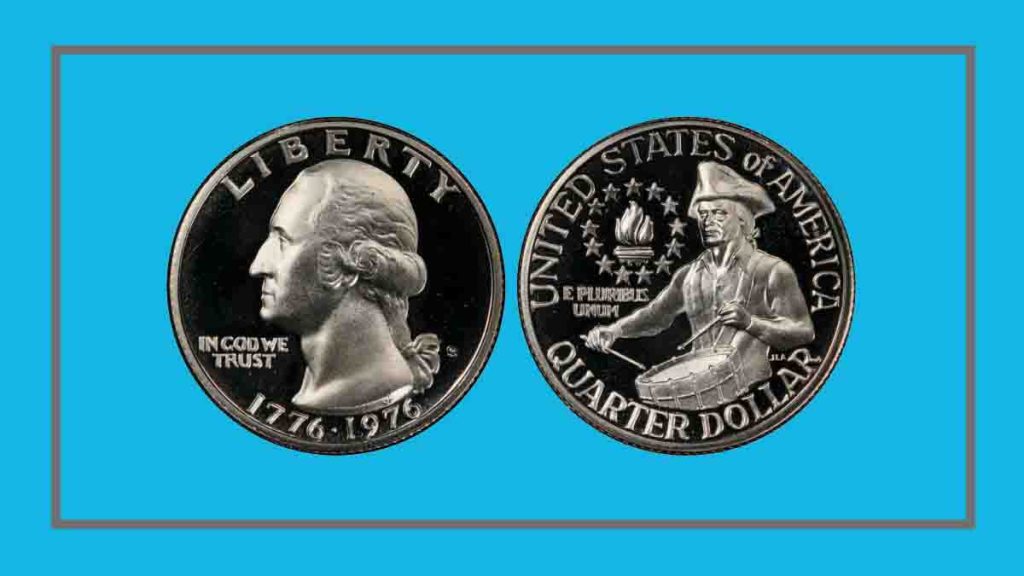
The Rare Bicentennial Quarter Valued at $120 Million: Still in Circulation?
Imagine finding a 25-cent coin in your pocket change that’s worth a staggering $120 million. While it may sound like a numismatic fairy tale, reports have surfaced about a rare 1976 Bicentennial Quarter with such an astronomical value. But is this coin real, and could it still be in circulation?
Understanding the Bicentennial Quarter
In 1976, to commemorate the United States’ 200th anniversary of independence, the U.S. Mint released a special edition quarter. Unlike the standard Washington quarter, this Bicentennial version features a colonial drummer on the reverse side, designed by Jack L. Ahr, and bears the dual date “1776–1976.” Over 1.6 billion of these quarters were minted, making them common in circulation.
What Makes a Bicentennial Quarter Valuable?
While most Bicentennial Quarters are worth only their face value, certain rare variants have fetched significant sums due to unique characteristics:
1. Minting Errors
Some quarters exhibit minting errors, such as double strikes or misaligned dies. These anomalies can make a coin highly sought after by collectors.
2. Silver Composition
A limited number of Bicentennial Quarters were struck in 40% silver, primarily for collector sets. Occasionally, these silver coins entered general circulation, and their metal content adds to their value.
3. Proof Coins
Proof coins are specially made for collectors, featuring a high-quality finish and sharp details. A 1976-S Proof Bicentennial Quarter in pristine condition can command high prices at auction.
4. Unique Prototypes
There are rumors of prototype Bicentennial Quarters that were never officially released. If such a coin exists and were to surface, its rarity could justify an exorbitant valuation.
Is the $120 Million Valuation Realistic?
While some sources claim that a rare Bicentennial Quarter could be worth up to $120 million, it’s essential to approach such figures with skepticism. The highest price ever paid for a coin at auction is $18.9 million for a 1933 Double Eagle gold coin. Therefore, a $120 million valuation for a quarter would be unprecedented and likely speculative.
How to Identify a Valuable Bicentennial Quarter
If you’re curious whether you possess a valuable Bicentennial Quarter, consider the following steps:
- Check the Date: Ensure the coin bears the “1776–1976” dual date.
- Inspect for Mint Marks: Look for an “S” (San Francisco), “D” (Denver), or no mint mark (Philadelphia). Proof coins typically have an “S” mint mark.
- Examine the Coin’s Condition: Coins in uncirculated or proof condition are more valuable.
- Look for Errors: Use a magnifying glass to detect any anomalies, such as double strikes or misaligned designs.
- Consult a Professional: If you believe your coin is rare, have it appraised by a reputable coin dealer or grading service.
FAQs
How can I tell if my Bicentennial Quarter is valuable?
Look for minting errors, silver composition, proof quality, and overall condition. Consulting a professional appraiser is recommended.
Has any Bicentennial Quarter ever sold for millions?
While some rare variants have fetched significant sums, there is no verified record of a Bicentennial Quarter selling for $120 million.
Where can I get my coin appraised?
Reputable coin dealers, numismatic associations, and professional grading services like PCGS or NGC offer appraisal services.
Should I clean my coin before appraisal?
No, cleaning a coin can reduce its value. It's best to keep it in its current condition and handle it carefully.
Conclusion
While the notion of a $120 million Bicentennial Quarter is intriguing, it’s essential to approach such claims with caution. Nonetheless, certain rare variants of this coin can be quite valuable. If you come across a Bicentennial Quarter, take a moment to inspect it you might just have a hidden treasure in your hands.